

 See My Latest Article on HelloNation
What does year-round color actually mean?
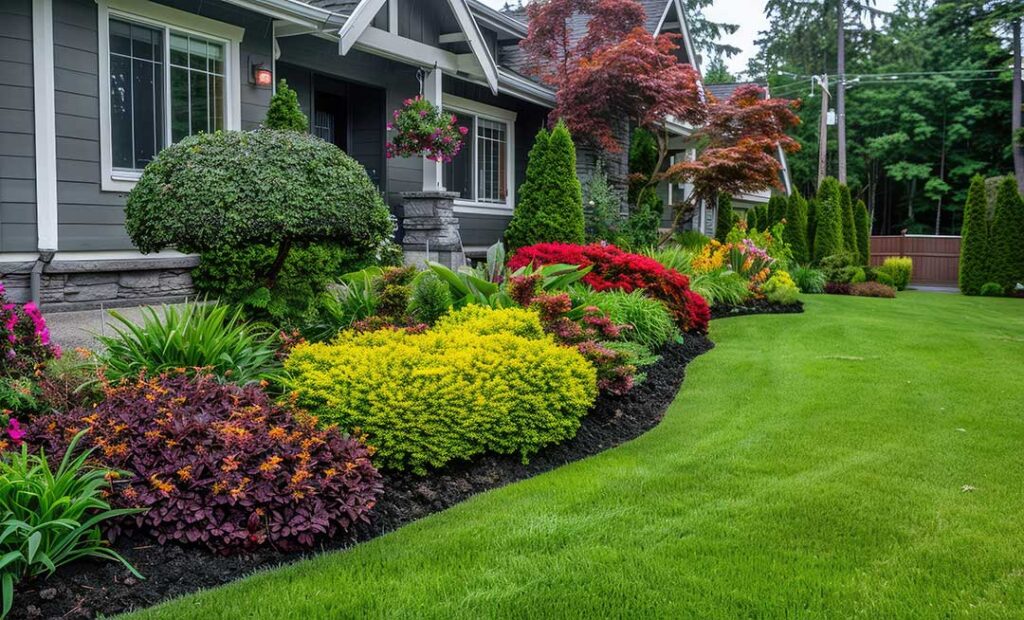
In Farmington Hills, year-round color rarely comes from one plant blooming in every season. A dependable landscape combines spring flowers, summer foliage, autumn leaves and berries, evergreen structure, and winter stems or bark.
After years of observing residential landscapes in Farmington Hills, I have found that the most successful planting plans rely on layers of seasonal interest rather than a long collection of plants that bloom briefly and then disappear.
A useful four-season planting plan may include:
- Spring bulbs and flowering shrubs
- Summer perennials with long-lasting blooms
- Trees and shrubs with strong fall color
- Evergreens for winter presence
- Plants with persistent berries, ornamental bark, or attractive seed heads
This approach also works well for the community’s typical mix of established trees, foundation beds, shaded yards, open lawns, and compact suburban planting areas.
Which plants provide color in early spring?
Early spring color comes from bulbs, flowering shrubs, and plants that emerge before trees fully leaf out. These choices are especially valuable because many yards look bare after snowmelt.
Good options include:
- Crocuses for very early flowers
- Daffodils for dependable yellow or white blooms
- Tulips for stronger color in sunny beds
- Grape hyacinths for small blue-purple flowers
- Creeping phlox for low-growing spring color
- Serviceberry for white flowers followed by edible berries
- Redbud for pink or lavender spring blooms
- Witch hazel for flowers that may appear near the end of winter or very early spring
Bulbs are easiest to establish when planted in fall, while shrubs and trees can generally be planted during spring or fall when the soil is workable. Planting a mixture of early, middle, and late spring bloomers prevents the garden from having one short burst of color followed by several quiet weeks.
A common mistake is placing all spring-flowering plants in one bed. Spreading them through foundation beds, borders, and naturalized lawn edges creates a more continuous effect.
What should be planted for summer color?
Summer color depends on more than flowers. In hot or dry periods, attractive foliage often lasts longer than individual blooms and provides a more stable visual foundation.
For sunny locations, consider plants such as:
- Coneflower for pink, white, or orange flowers
- Black-eyed Susan for yellow blooms
- Garden phlox for midsummer flower clusters
- Bee balm for red, pink, or purple flowers
- Catmint for blue-purple flowers and gray-green foliage
- Yarrow for flat flower clusters and drought tolerance
- Daylilies for repeated summer flowers
- Ornamental grasses for texture and movement
In partly shaded areas, hostas, coral bells, ferns, and woodland perennials can provide color through foliage even when flowers are limited. Coral bells are particularly useful because their leaves may be lime green, bronze, burgundy, silver, or nearly black, depending on the variety.
For a balanced bed, I usually recommend combining three visual roles: a taller plant, a middle-height flowering plant, and a low edging or ground-cover plant. Repeating those groups several times looks more natural and is easier to maintain than placing one of every available plant in a row.
Which plants provide fall color?
Fall color can come from leaves, berries, ornamental grasses, and seed heads. Trees and shrubs often create the strongest seasonal display because they provide color above the level of perennial beds.
Useful choices include:
- Red maple for red or orange foliage
- Serviceberry for red-orange fall leaves and berries
- Oakleaf hydrangea for burgundy foliage and peeling bark
- Viburnums for fall leaves and fruit
- Sumac for vivid red foliage
- Witch hazel for yellow fall leaves and late flowers
- Ninebark for colorful foliage and exfoliating bark
- Little bluestem for copper-orange tones
- Switchgrass for golden foliage and persistent seed heads
The exact color can vary with weather, soil, moisture, and exposure. A plant that turns brilliant red in one yard may appear more orange or yellow in another. This is normal and is one reason to select several plants with different seasonal traits instead of depending on a single “showstopper.”
How can a landscape stay attractive during winter?
Winter color is mostly created by structure, texture, and contrast rather than flowers. Evergreen foliage is helpful, but a landscape does not need to be dominated by evergreens to remain interesting.
Consider adding:
- Eastern white cedar or other locally suitable evergreen forms
- Dwarf conifers for small beds
- Red-twig or yellow-twig dogwood for colorful stems
- River birch for peeling bark
- Paper birch for bright trunks
- Winterberry holly for red berries
- Ornamental grasses left standing through winter
- Hydrangea flower heads that dry naturally on the plant
- Shrubs with branching shapes that remain visible after leaf drop

Winterberry holly requires both male and female plants for fruit production. Berries may also attract birds, so placement matters near walkways, driveways, and windows.
Leaving some ornamental grasses and perennial seed heads standing until late winter provides habitat and adds movement when snow is present. Cutting everything down in autumn may make the yard look tidier, but it removes much of the texture that carries a planting bed through the cold season.
How should plants be selected for local soil and light conditions?
The right plant for a location depends first on sunlight, drainage, mature size, and soil conditions. Farmington Hills properties commonly include clay-rich soil, compacted areas near construction, and drainage differences between high ground and low spots.
Clay soil is not automatically a problem, but it can hold water and become difficult to work when wet. Improve planting areas gradually with organic matter, avoid walking on saturated soil, and do not dig or amend a bed without considering how water will move through it.
Before choosing plants, observe the site for a full day:
- Six or more hours of direct sun is generally considered full sun.
- Two to six hours is usually part shade.
- Bright filtered light beneath trees can support different plants than deep shade.
- Areas beside pavement may be hotter and drier.
- Low portions of a yard may stay wet longer after rain.
A soil test can help identify pH and nutrient conditions, but it cannot replace observation. A plant labeled for “sun” may still struggle if nearby trees compete for water or if reflected heat dries the soil.
What is a simple planting sequence for four-season interest?
For a manageable residential bed, begin with structure and work downward. Plant one small tree or several shrubs for height, then add evergreen or winter-interest plants, followed by perennials and bulbs.
A practical sequence might include:
- One serviceberry or other small ornamental tree
- Two or three shrubs with berries, fall color, or distinctive bark
- Evergreen accents for winter structure
- Repeated groups of coneflower, black-eyed Susan, coral bells, or ornamental grasses
- Spring bulbs tucked between perennials
Use repeated groups rather than isolated specimens. Repetition creates visual continuity, while differences in bloom time keep the bed changing from spring through winter.
Allow enough mature spacing for air movement and growth. Overcrowding may produce quick color, but it often leads to pruning, weak growth, disease pressure, and plants competing for moisture.
What common mistakes reduce year-round color?
The most frequent mistake is choosing plants only for their flowers. A second is planting too many varieties without enough repetition. Another is ignoring winter appearance entirely.
It is also easy to select plants based on a nursery container’s current size rather than the plant’s mature dimensions. A shrub that looks small at planting may eventually block windows, crowd sidewalks, or shade plants that require sun.
The strongest year-round landscapes in Farmington Hills usually have a clear structure: evergreen or woody plants for permanence, perennials for seasonal change, bulbs for early color, and selected grasses or seed heads for winter texture. That combination provides interest without requiring every plant to be in bloom at once.